
Sage Lorenz · 13 September 2026
Britain's Sensor Networks Face Fresh Calibration Tests Amid Regulatory Overhauls
Britain's extensive array of environmental sensor networks now undergoes systematic recalibration procedures as updated regulatory frameworks take shape across multiple sectors. Government agencies coordinate these efforts with industry partners while new standards emerge from ongoing reviews that began in early 2025 and continue through scheduled implementation phases. Data collection systems for air quality, water monitoring, and atmospheric conditions require adjustments to meet revised accuracy thresholds that align with international benchmarks.Background on Existing Sensor Infrastructure
Thousands of sensor units currently operate throughout England, Scotland, Wales, and Northern Ireland, feeding real-time information into centralized databases managed by bodies such as the Environment Agency and the Scottish Environment Protection Agency. These networks expanded significantly after 2018 when initial digital upgrades replaced older manual sampling methods with automated units capable of continuous operation. Calibration routines historically occurred on annual cycles, yet recent assessments revealed drift patterns in certain models that exceed acceptable variance levels under proposed rules.
Regulatory Overhauls Driving the Changes
New directives emphasize stricter performance criteria for data precision, particularly in urban zones where pollution sources cluster densely. Officials announced phased rollouts that prioritize high-traffic monitoring sites first, followed by rural installations scheduled for later stages. September 2026 marks a key milestone when full compliance deadlines activate for primary networks, prompting accelerated testing schedules across regional authorities. The Department for Environment, Food and Rural Affairs coordinates these timelines while consulting technical committees drawn from academic institutions and equipment manufacturers.
Observers note parallels with approaches taken in other regions where similar overhauls occurred. For instance, US Environmental Protection Agency guidelines established reference protocols that British regulators examined during policy development. Likewise, Canadian standards for sensor interoperability influenced discussions on data formatting requirements that will apply post-2026.
Calibration Testing Procedures in Detail
Technicians perform field verifications using portable reference instruments that compare readings against certified laboratory standards before adjustments occur on-site. Laboratory-based recalibrations supplement these efforts for units showing persistent offsets beyond tolerance ranges. Protocols specify multi-point checks across temperature and humidity gradients because environmental variables often affect sensor response curves. Teams document each step through digital logs that feed into audit trails required under emerging transparency mandates.
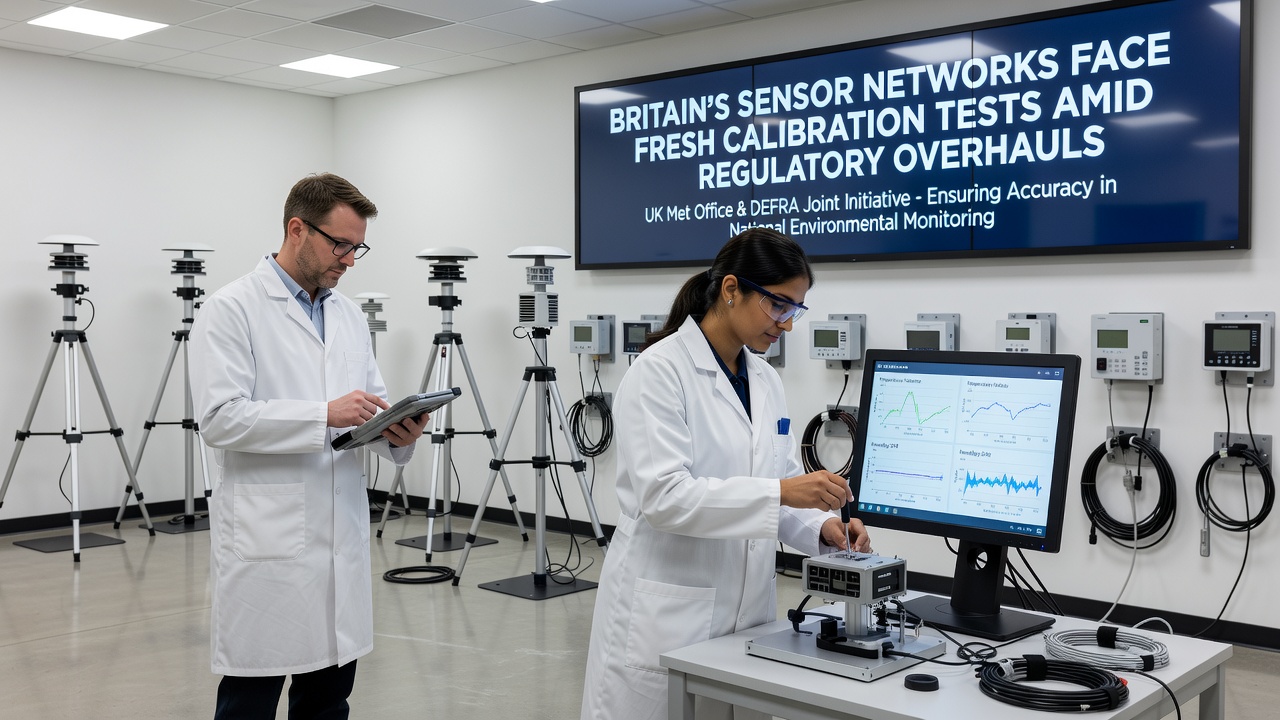
Equipment suppliers now supply updated firmware packages that incorporate correction algorithms refined through recent validation studies. These updates address nonlinear behaviors observed in older sensor generations when exposed to specific pollutant mixtures common in UK settings. Training programs for maintenance crews expanded accordingly, incorporating modules on the new regulatory expectations and troubleshooting methods for edge cases encountered during deployment.
Impacts on Data Continuity and Reporting
During active calibration windows, certain stations temporarily pause data transmission to avoid feeding unverified readings into public portals. Backup units fill gaps at critical locations, while statistical interpolation methods handle shorter interruptions at secondary sites. Researchers who rely on long-term datasets receive advance notices so they can account for potential discontinuities when modeling trends. Figures from pilot programs conducted in 2024 indicated minimal overall data loss when staggered testing schedules were applied across networked stations.
International collaboration continues through forums such as the European Environment Agency, where British representatives share calibration findings even after formal separation from EU structures. Australian sensor validation reports have also informed discussions on handling extreme weather resilience in calibration routines, given increasing variability in UK climate patterns. These exchanges help refine best practices without duplicating prior efforts.
Future Outlook for Network Operations
Authorities project that recalibrated networks will deliver improved interoperability with emerging satellite-based observation systems scheduled for integration by 2028. Funding allocations announced in recent budgets support both hardware refreshes and software enhancements needed to sustain performance under tighter standards. Industry groups track progress through quarterly reports that highlight compliance rates and remaining challenges at various site types.
Conclusion
Britain's sensor networks adapt to these calibration demands through coordinated technical and administrative measures that align with revised regulations. Implementation continues steadily toward the September 2026 targets while drawing on established methods from comparable programs abroad. Sustained attention to verification processes supports reliable data flows essential for environmental management decisions across the country.